The Historic Site
How a clearing in the forest became a settlement, a church, and a village worth preserving.
The $45 church
In the spring of 1840 — their first spring in Wisconsin — the settlers erected a special structure to serve as both church and school: 30 feet long and 20 feet wide. Because they did all the labor themselves, the building cost only $45.00. Eventually this church was named "Trinity." It stood on the 40 acres the families had set aside at the middle of their settlement as church property, purchased from the government Land Office in the autumn of 1839.
Four churches on the same land
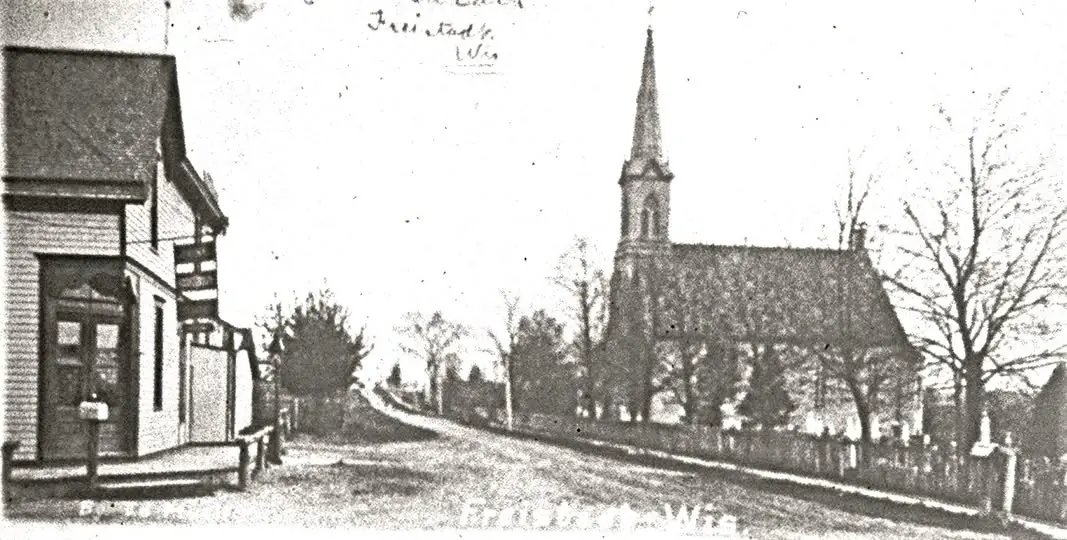
That $45 building was the first of four church structures the congregation would build. The fourth — designed by architect Frederich Velguth, a leading church architect of the day — was built in 1884 and is still in use today, on the same land purchased in 1839. Its steeple has watched over the Freistadt crossroads for more than 140 years.
A village preserved
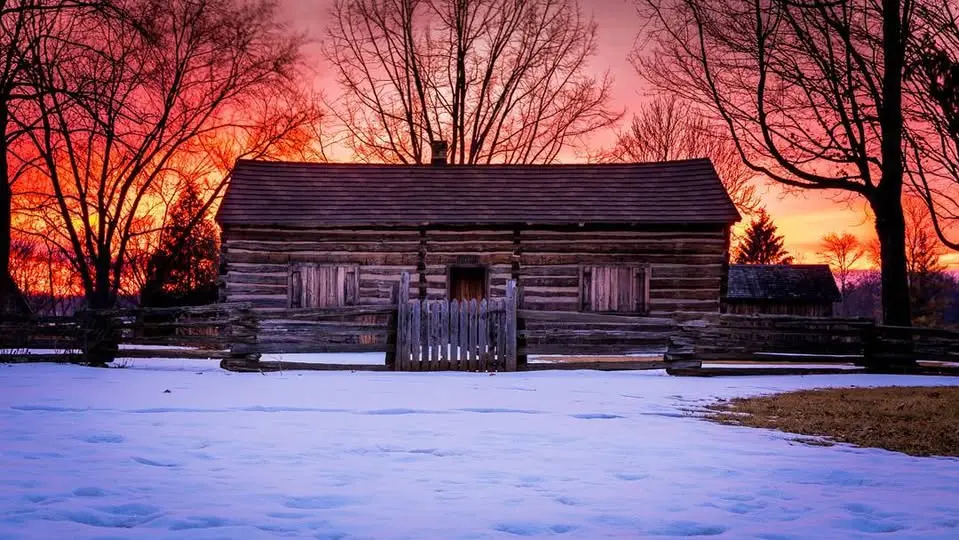
The Trinity Freistadt Historical Society, formed in 1965, operates and maintains the historical portions of the Trinity Freistadt grounds — today a village of twelve historic buildings including the log cabin and the blacksmith shop. The log cabin stands where the settlers celebrated their first Easter in their new home, in the spring of 1840.
The buildings hold the society's growing collection: vintage cameras, handkerchiefs, almost 100 years of confirmation photos from Trinity's vault, a recreated historic hardware store, vintage clothing, farm tools, and rotating special exhibits mounted each season. Giving that collection a proper home is the goal of the Exhibition Barn campaign.
The site keeps living history alive, not just objects: the blacksmith fires the forge on event days, bread is baked and jam is made for the Fourth of July, and schoolchildren trade textbooks for bonnets and slates on field-trip days.
Want to walk the village yourself? See the Visit page for buildings, tours, and directions — or come on an event day when every door is open.