The Emigration Story · Part I of V
Why Did They Leave?
Prussia from 1817–1835: Religious Freedom and the Old Lutherans in Prussia
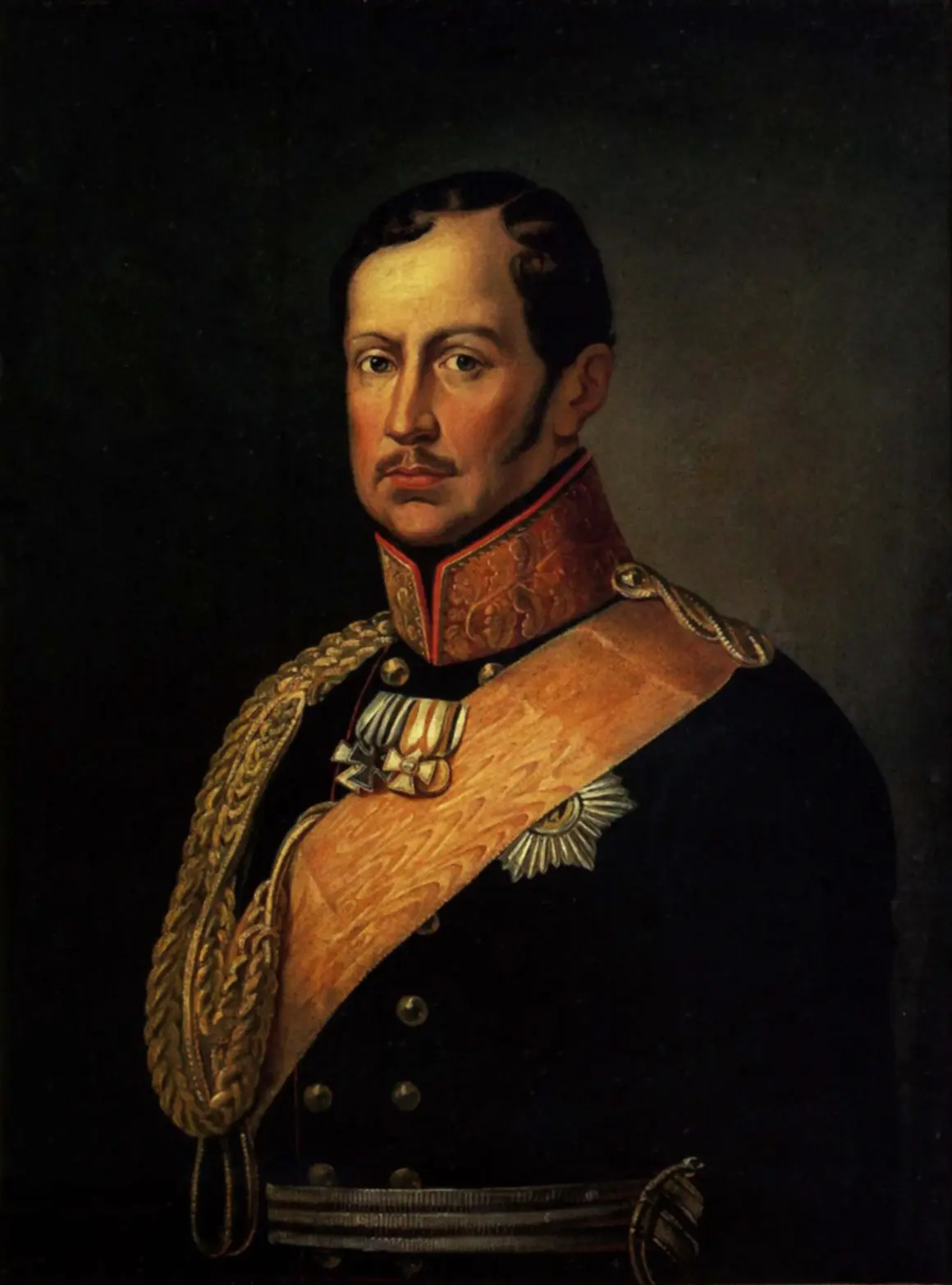
In 1839, the Lutheran Church in Prussia had been abolished, and it was illegal to be a Lutheran. Prussia was not exactly a backward nation where one could expect this sort of thing to happen. It was fast becoming the dominant state among the many independent German states of that day. Prussia was renowned for its school system, its commerce and industry, its prosperous farms, and of course its army. How could people in such a progressive country lose their religious liberty?
Actually, it all began so smoothly and quietly that few Lutherans ever noticed that anything was wrong. King Friedrich Wilhelm III was of the Reformed faith, and his wife was a Lutheran. Since the Lutherans practiced closed communion, the King was not permitted to take communion with his own wife. This must have been difficult for the King, one of the most powerful monarchs on earth, to swallow.
In order to avoid such Holy Communion problems in his realm, in 1817, the King wrote a new liturgy and an Agenda, or Order of Worship, to be used by both the Lutheran and Reformed churches. Since 1817 celebrated 300 years since the Reformation, the King asked all churches to celebrate by using the new liturgy. The cooperation was good, and so the King asked all Reformed and Lutheran pastors to accept the new liturgy on a permanent basis.
However, the pastors of both faiths preferred their own liturgies, and there was much criticism of the new Agenda. It was the wish of the King that his people could experience a spiritual “unification,” and so the Union Church was born, a combination of both the Lutherans and the Reformed. There was not much enthusiasm for the new church, and by 1822 only one-sixteenth of all the clergy in the land had accepted the new Agenda, or Book of Worship. The King referred to criticism of his Agenda as “twaddle.”
Nevertheless, in 1824, he did revise it in order to make it acceptable to both the Lutherans and the Reformed. He let it be known that there would be “unpleasant consequences” for pastors that would not accept the new Agenda. A number of prominent clergymen who disagreed with the King were in fact now replaced. Continuous pressure was brought to bear on the clergy, and by 1825, about two-thirds of all the clergy in Prussia had accepted the Union Agenda. The pressure from the government continued, and by 1827, six-sevenths of the clergy were in the Union church. In Pomerania, only 175 churches remained Lutheran and 1,136 had joined the Union Church. In 1829, the King gave the individual provinces the right to use variations in the Agenda based on accepted local practices. At this point, even Rev. Schliermacher, who had once led the opposition, agreed to the new Agenda. Since local variations were permitted, there was not too much that could be criticized from a liturgy standpoint. But now new questions were being asked. Does one change religious practices because the King wants them changed, or because God wants them changed? Even though the same liturgy was being used, it was perfectly clear that the former Union and Lutheran pastors were far from agreeing on what the true meaning of Holy Communion was or what was the proper meaning of predestination. Nevertheless, by this time almost everyone had joined the Union Church, and the King called for a large celebration on June 25, 1830 to commemorate the triumph of the new Union Church.
In Breslau, in Silesia, Rev. Scheibel still led some dissenters, but he was removed from office. A few prominent pastors like Buschke, Steffens and von Hauginetz still remained, and they repeatedly petitioned the King to grant the Lutheran Church the right to continue on an independent basis, but all requests were promptly denied. To put an end to the opposition, in 1834, the King revised the laws so that all secret meetings were illegal, even religious meetings. No meeting could be held anywhere without a permit and, of course, the Lutherans were not granted any permits to meet. It became illegal for anyone to act as clergyman unless approved by the Union Church, and so the few remaining Lutheran clergy could no longer legally act as clergy. Furthermore, the law said that all parents must send their children to the state, or Union, schools. Punishment for disobeying these laws consisted of prison terms, heavy fines and the confiscation of property by the state.
Now, either the Lutherans would have to give up or face the consequences. The Lutherans continued to meet, so the king took the next step to force cooperation. A few churches were still in the hands of the Lutherans, and now those churches were closed. At Hocnigen, in Silesia, the congregation would not turn over the keys of the church. Pastor Kellner was jailed, but the congregation still held the church. Weeks went by, and finally the King called out the army. On December 23, 1834, 400 infantry and 300 cavalry surrounded the church and the 200 Lutherans who were defending it. The soldiers dispersed the crowd with blows from their rifle butts and the flats of their swords and took over the church. The defending Lutherans were jailed for a time.
With their last church gone, the Lutherans (now called “Old Lutherans” because they stayed with their old faith) met in 1835 to decide what to do. They decided that they would give up their homes, farms, money and goods if need be, but they would not give up their struggle for a free Lutheran church.
The Old Lutheran clergy now traveled from place to place in order to stay out of the hands of the police, but virtually all of the clergy did spend some time in prison. Lay people had to pay heavy fines and had their property confiscated. Under these circumstances, the Old Lutherans had to start thinking of leaving Prussia and starting a free Lutheran church elsewhere. In spite of the persecution by the government, the Old Lutherans were never eradicated. On the contrary, as people saw the oppression by the government, many that had joined the Union Church had second thoughts about it. They began to see that a church whose policies were determined by government officials instead of the church body could not maintain pure doctrine. Now people in Silesia, Pomerania, Brandenburg and Saxony gathered into groups for the purpose of emigrating, and the great Lutheran emigration began to get underway.